At FHE Health, our goal is to treat substance use and mental health disorders with a wide range of tools so we can personalize a treatment plan for each patient who comes to us for help.
To meet this goal, we combine evidence-based services like counseling and therapy with holistic treatments aimed at building overall wellness, such as breathwork, yoga and expressive arts.
One of the holistic services we offer patients at FHE Health who are working through addiction or a mental health condition is acupuncture.
What Is Acupuncture?
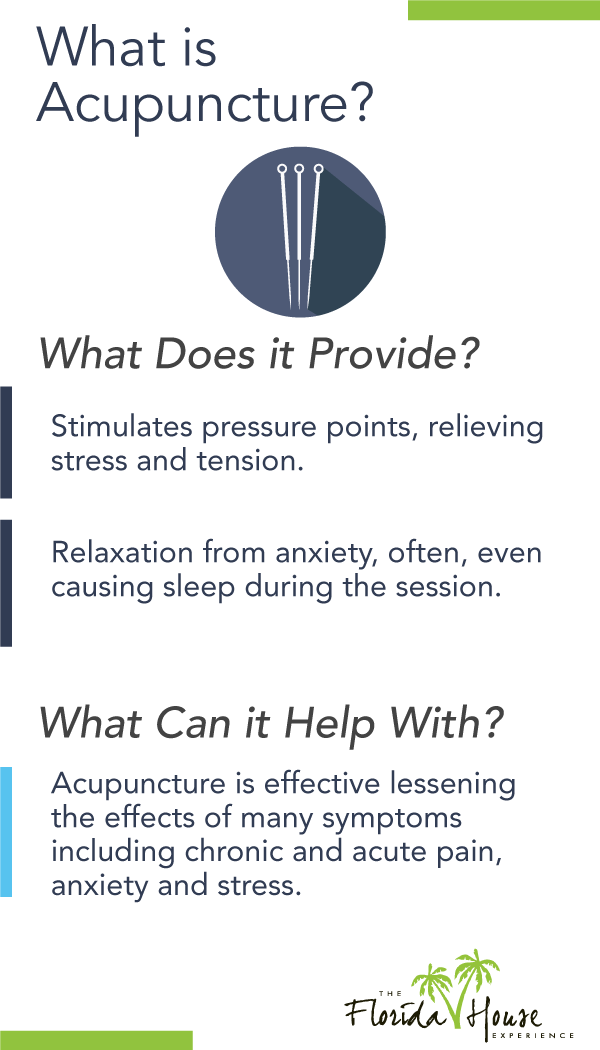 Acupuncture involves placing thin needles in the skin at specific points and has roots in ancient Chinese medicine. Long used to treat pain and other physical and mental conditions, it was based on the belief that illness resulted from a disruption in the body’s qi, or natural energy flow.
How Does Acupuncture Work?
Traditional practitioners placed needles at points along pathways known as meridians, with the goal of restoring the body’s energy and correcting the issue being treated.
Today’s acupuncture practitioners don’t always use this explanation. In modern practice, acupuncture is understood to stimulate muscles, nerves and connective tissue throughout the body.
What Is Acupuncture Used to Treat?
Acupuncture is widely used as an integrative treatment for pain, both chronic and acute. This matters in addiction treatment because pain is often treated with opioids, which carry a high risk of addiction. For patients in recovery, treating pain through non-addictive means can support their progress.
Pain isn’t the only reason people seek acupuncture. It is also used as a complementary approach for:
- Stress-related conditions like anxiety and depression
- Post-traumatic stress disorder (PTSD)
- Substance use disorders and addiction
Does Acupuncture Work?
 As with all therapies, each patient has unique needs, and results vary from person to person. Your treatment team at FHE Health will help determine whether acupuncture is a good fit for your treatment plan.
According to the National Center for Complementary and Integrative Health, research suggests acupuncture may help ease several types of pain, and it is being studied for a range of other conditions. Here are some of the ways it may help:
Acupuncture for Depression and Stress
Acupuncture can be very calming once a patient is used to it, and many patients find themselves relaxing or even falling asleep during sessions. That relaxation can help reduce daily stress, which plays a large role in many mental health conditions.
Some research suggests that combining acupuncture with counseling for depression may be more effective than counseling alone.
Acupuncture for Other Mental Health Conditions
Acupuncture has also been explored for conditions such as PTSD and generalized anxiety disorder (GAD). In one case report, a patient living with both reported an enhanced quality of life after receiving acupuncture targeted at her symptoms.
Acupuncture for Chronic Pain
Treating chronic and acute pain is the most widely recognized use for acupuncture. Because it offers a non-addictive option, some physicians use acupuncture alongside other treatments to help reduce reliance on opioid pain medication.
Acupuncture for Addiction
Beyond its role in managing pain without addictive medications, acupuncture is used in some addiction treatment settings as a complementary therapy to help patients relax and manage stress during early recovery. Research on its effects in addiction treatment is still developing, which is why we offer it alongside, not in place of, evidence-based care.



What Does an Acupuncture Treatment Entail?
 When you come to FHE Health for residential or outpatient treatment for addiction or a mental health condition, you’ll first receive a pre-screening. This generally includes an in-depth psychiatric screening and a consultation where we build a treatment plan personalized to your needs.
If your treatment plan includes acupuncture, here are some questions you might have before it begins.
Are There Different Types of Acupuncture?
Most acupuncture uses standard needles without modification, but you may come across other modalities with different practitioners. One example is electroacupuncture, in which needles are connected to a mild electrical current that adds a pulsing sensation. Some practitioners also use heat to modify the treatment.
What Happens During Acupuncture?
When you arrive for your acupuncture treatment, there are a few things you can expect.
First, the practitioner will use disposable, single-use needles to protect your health throughout your treatment.
You’ll lie face up or face down on a comfortable, padded table during the session.
Practitioners may do a brief examination of the areas of concern, check your pulse and consider other factors related to the treatment.
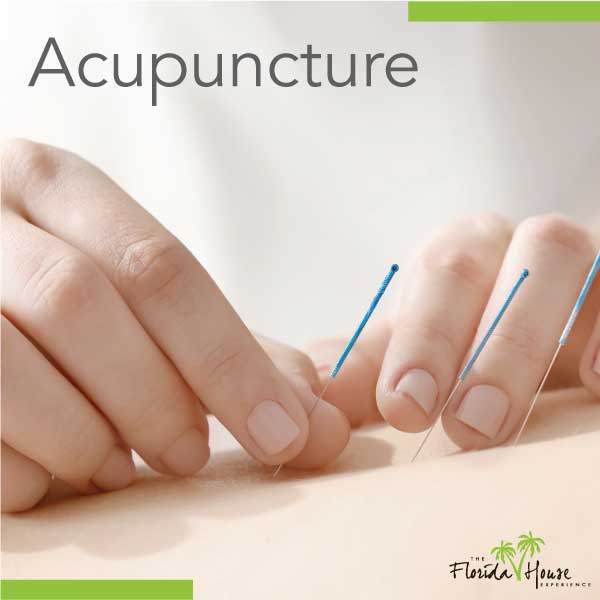
Acupuncture consists of needle insertion, manipulation and removal:
- Insertion: Needles are gently inserted at specific points on the body based on the concern being treated. Practitioners use a map of insertion points to plan each session.
- Manipulation: The practitioner may gently twist the needles or use heat to adjust the sensation and level of stimulation.
- Removal: After the session, the needles are removed from the skin.
Does Acupuncture Hurt?
The first few times you experience acupuncture, you may feel some discomfort or anxiety about the needles. For most patients, these feelings fade with experience. Insertion and removal are generally painless because the needles are very thin and inserted only shallowly.
Why We Offer Acupuncture at FHE Health
Acupuncture is one of many services we offer as part of a comprehensive, holistic approach to addiction and mental health treatment. Alongside proven treatment strategies like counseling and group therapy, it gives patients another way to manage pain, ease stress and support their overall well-being. Other holistic services include breathwork therapy, yoga and fitness programming at our wellness center.
When you enter treatment at FHE Health, we’ll build a plan that meets your needs. To learn more, contact FHE Health today.